



The current shift is toward connected context
On 15 September 2026, AWS and Salesforce announced integrations intended to bring CRM context and actions into tools where teams already work. This is a current example of a broader product direction: useful AI depends on access to the business information behind the conversation.
Salesforce’s separate Enterprise AI Harness announcement also places context and business controls alongside reasoning. These announcements are vendor descriptions of capabilities and plans. They are not evidence that installing one connector makes every customer record trustworthy.
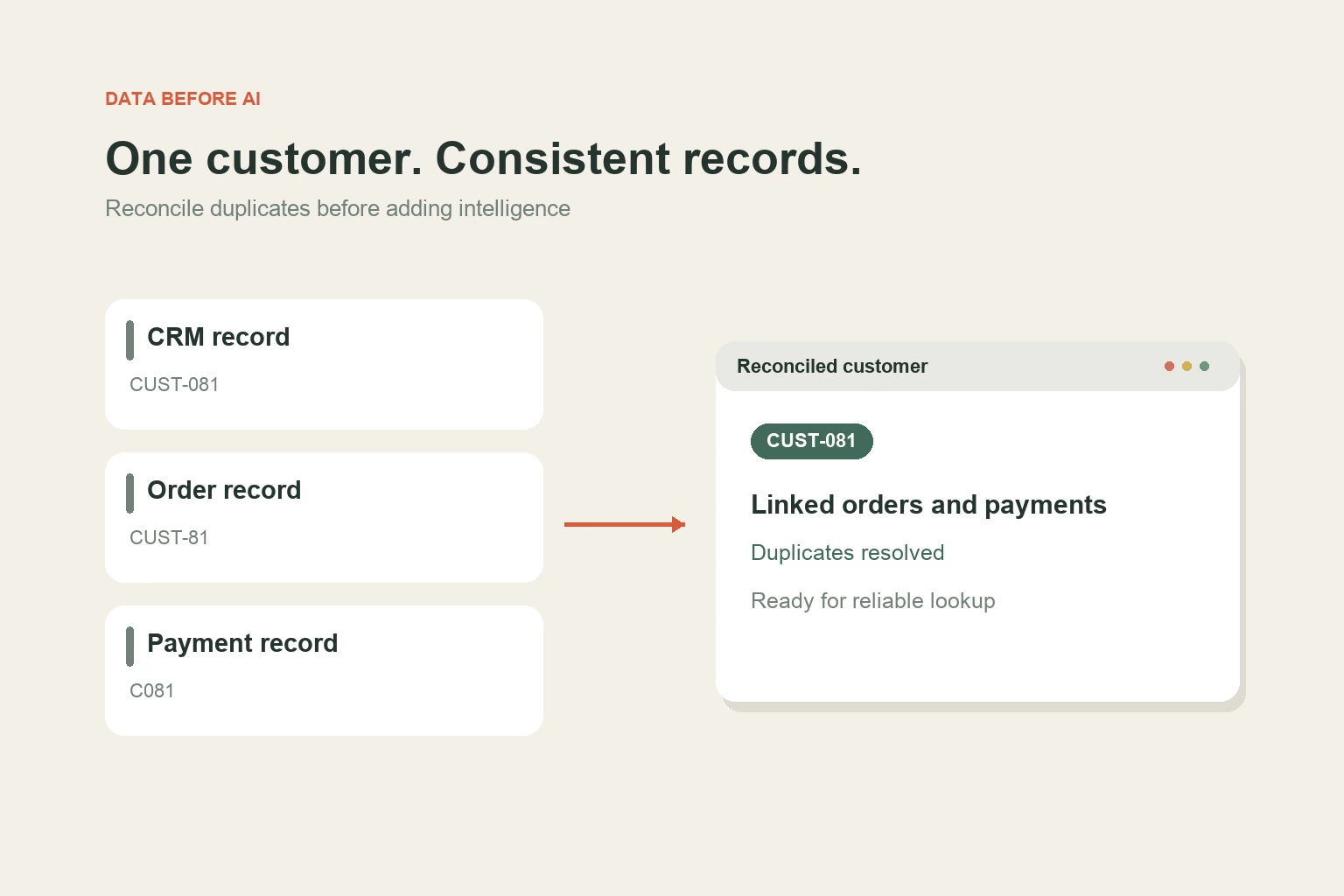
For an owner-run business, the first question is usually simple: if someone asks about an order, which system contains the answer, and does everyone use the same record?
Decide who owns each fact
You do not need one application to own everything. You need a clear decision about which system owns each fact and how updates flow. The CRM may own the customer relationship, stock software the available quantity, and the accounts package the paid status.
The table is an example, not a universal architecture. Write your own ownership map before choosing an integration. If two teams are allowed to edit the same fact, define which update wins and how conflicts are resolved.
Fix the website-to-CRM handoff
A web enquiry should carry its source and relevant fields into the team’s working record. A notification email can alert someone, but it should not be the only place where the enquiry exists.
Define how the form matches an existing contact. Avoid merging two people simply because they share a business name. Give each enquiry its own reference and preserve the original request. Assign an owner and a next action so the record is more than an address book entry.
For an illustrative distributor, an enquiry about a product might create a lead, attach the requested product code and tell the salesperson responsible for that area. The salesperson can then see the enquiry and current stock from the systems that own those facts.
When that route works, an AI assistant may help prepare a reply or summarise the request. It is working from a clearer process rather than trying to infer a customer history from disconnected emails. See our website and CRM integration guide for the handoff questions.
Give the assistant a useful answer boundary
Define one question the assistant should answer and the sources it may use. “What is the current status of this order?” is more testable than “understand our customers.” Show the source record or reference alongside the answer.
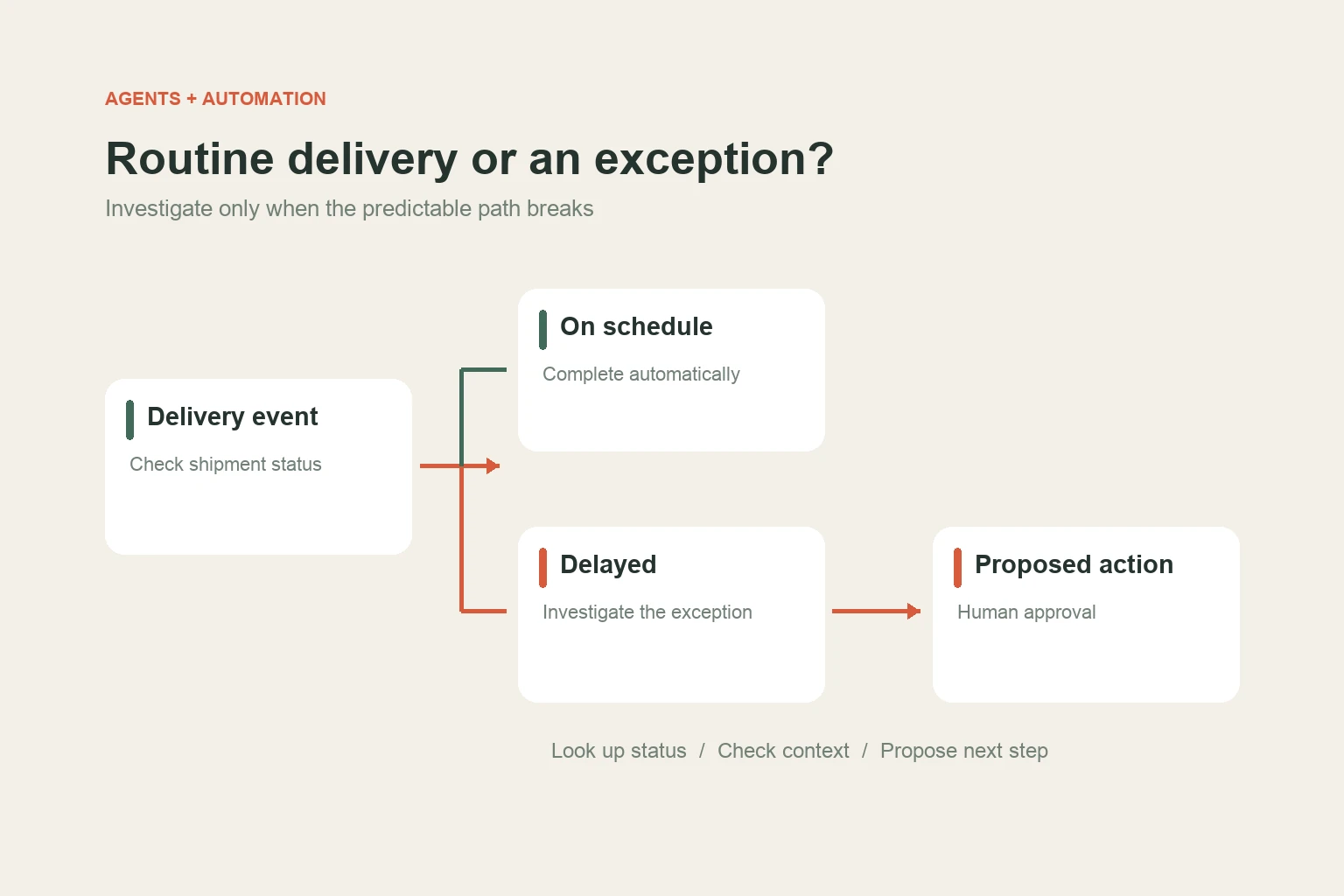
Require an explicit unresolved result when the order cannot be matched or the source is unavailable. An assistant that admits the missing record is easier to supervise than one that produces a plausible status.
- Use stable customer and order identifiers across the connection.
- Request only the fields needed for the task.
- Keep access aligned with the person asking the question.
- Show when the source was retrieved or when it may be stale.
- Separate answering a question from changing the underlying record.
These are proposed implementation checks. Test them using duplicate names, old orders, cancelled orders and records the requesting user should not see. A clean sample should not be the only acceptance case.
Measure fewer handoffs and better outcomes
Count the steps between the enquiry and the next useful action. Track retyping, unmatched records, duplicate contacts and cases where staff still need to ask a colleague. That tells you whether the connection has made the work easier.
If you add an AI assistant, record answer corrections and unresolved questions separately. The best next improvement may be to repair the data mapping or update a policy rather than change the model.
A small connected process gives you a stable foundation for later automation. It also makes ownership visible when something fails. Start with the records your team needs every day, then build the assistant around the questions those records can reliably answer.
Sources and further reading
Primary sources checked on 3 October 2026. Product announcements describe vendor plans and capabilities; availability and results depend on the implementation.
- AWS and Salesforce: CRM data and AI integrations
15 September 2026 - Salesforce: Trusted Enterprise AI Harness
11 September 2026